
In each episode of The Playbook presented by FanFood, host Rob Cressy discusses how leaders are modernizing today’s customer experience through technology in sports, entertainment and hospitality. We invite industry veterans to talk about how customer expectation have changed in today’s world, and how businesses need to change accordingly for greater operational efficiency and better guest experience.
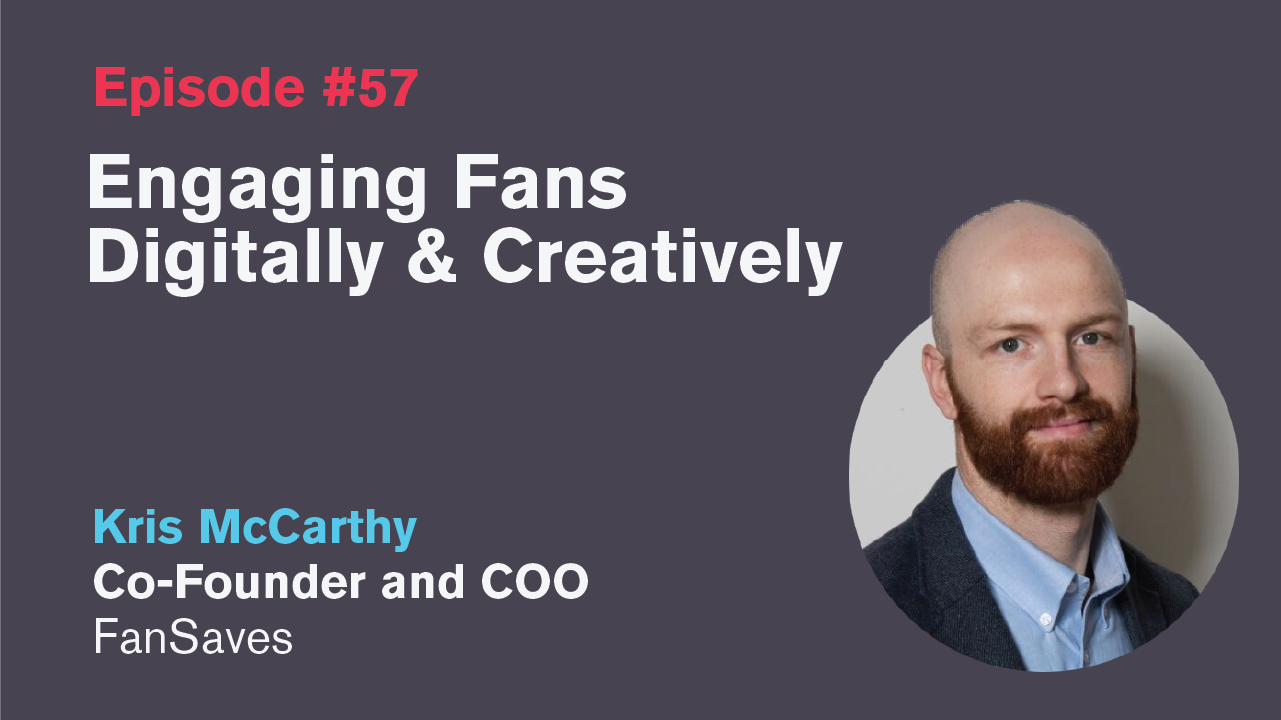
Kris McCarthy, Co-Founder, and COO at FanSaves join Rob Cressy to talk about engaging fans digitally and creatively. What can be done to engage fans without games being played? What are creative ways that teams can engage fans? How can we drive fans to digital portals where there are greater chances of engaging and delivering value for them? How important is fan loyalty and creating reward systems? Why is there a big opportunity for smaller brands & teams to differentiate themselves from slower-moving large brands right now?
To see how your restaurant, establishment, or venue can benefit from FanFood’s platform please get in touch here.
Listen to the Gameday Playbook on:





Rob Cressy: (00:04)
Welcome to the GameDay Playbook presented by FanFood. A discussion around how leaders are transforming the sports and live entertainment industries by leveraging technology to enhance the fan experience and operate game day more efficiently. I’m your host, Rob Cressy, and joining me today is Chris McCarthy, co-founder and COO at FanSaves. Chris, great to have you on the show.
Kris McCarthy: (00:30)
Rob, thanks so much for having me looking forward to the conversation.
Rob Cressy: (00:34)
Can you give a quick overview of who you are and what you do?
Kris McCarthy: (00:37)
Yes, I’m a true boot Canadian. Grew up playing hockey all my life and had the pleasure and the opportunity to play seven years professionally in the federal hockey league before transitioning into the front office. It was in the front office where I came across a pain point in the sponsorship industry. My co-founder and I were selling sponsorship and brands kept telling us that they didn’t want the traditional inventory of signage or a scoreboard out, or a coupon in the game day program. That did nothing to drive traffic into their establishment. And some of these organizations, these brands had sponsored teams in the past and didn’t see anything come back in. So, we put our heads together and we created a mobile platform that could really activate the fans by offering discounts and deals to the fans from the sponsors of their favorite teams. That’s how FanSaves was born and three years later we’re still grinding hard. It’s been a crazy awesome roller coaster ride since.
Rob Cressy: (01:35)
So, let’s dig a little deeper into that because I like the premise, but activating fans with sponsors is a little bit of a challenge as someone who’s on the fan side because we always know what sponsors want. Sponsors want us to buy something that they’re doing. So, by design, oftentimes they don’t think about the engagement side. As you mentioned, there’s a lot of brand awareness in terms of here’s some signage, here are some things that aren’t doing much. The alternative is oftentimes the inverse will buy what I’m selling, buy what I’m selling. Well, guess what? That doesn’t really engage me either. So, take us into your mindset and in terms of how you guys can engage fans on the sponsor’s behalf.
Kevin McCarthy: (02:21)
Yeah. A big problem that we really noticed right off the bat and over the last three years, every sports fan that we’ve run into, we’ve asked them two questions. Who’s your favorite professional sports team and how many sponsors of that sports team can you name? 95% of the time that the fan just looks at us with a blank stare. Some of them can name a couple and very few can name over three or five. So, when fans going into an arena or stadium they’re so saturated by advertising. They’re hearing it, they’re seeing it, they’re touching it. It’s all around you. So, when they leave the stadium, they’re not really thinking about who the sponsors were. They’re really thinking about who scored the goals? Was there a fight? Was there like that big play, right? So, a lot of the brands would really get lost in the fan’s minds after the outside of the stadium.
So, we’re a platform where we can put all of the sponsors of a team on their page, similar to an Instagram. You want Instagram, you follow an influencer and you follow a team, an organization, and then you can see all the pictures and content they’re posting. It’s very similar to FanSaves. You can follow your favorite team organization instead of seeing pictures and content. You’re able to see their sponsors who are offering you a discount or deal, which you can redeem and person in the physical brick and mortar location or online. So, we’re really engaging those fans with the sponsors. And the sponsors are able to collect all of the customer analytics and data, which they couldn’t really know from having a sign in the arena and not knowing who’s seeing that sign and who’s coming in because of it, right? So, we’re a digital solution and with this whole pandemic, it’s really put a focus on digital and sports tech. I think a lot of the teams that are going to be really successful coming out of this are really going to leverage technologies that are out there right now.


Rob Cressy: (04:07)
When I think about the sponsors that I remember when going to the games, it’s very few, if any, but of sports where I am more brand aware, it is hockey. Why is that? Because oftentimes I’m from Pittsburgh, so I’m a Penguins fan even though I live in Chicago. If I’m watching a Blackhawks or a Penguins game, I know if they’re on their home or road based on the signage on the boards, because that’s really the only thing that I notice in terms of what’s different. Does it really resonate a ton for me? No, but really that’s what it helps identify. When I think about all right, well, where do sponsors do a good job of fan engagement? I think the first and only one that really comes to my mind would be something like Dunkin Donuts, who has the coffee versus donut versus bagel, race at intermission or halftime of a game or something where we’re all sitting there and you’re like, all right, pick your number or look in your program. And you’re like, all right, I’ll go with the donuts. And you get that. Another one would be basketball. Score a hundred points and you win a free taco. So, those are the type of things where there is fan engagement, we’re all in it together. But here comes to the new challenge. There is not a lot of, actually, there are no sports with fans currently watching them right now. So, what can sponsors do to engage fans knowing that in an arena isn’t an option?
Kevin McCarthy: (05:40)
Yeah, there’s some really cool emerging technologies. I think we’re well-positioned that in the sense where the fans aren’t physically going into the stadiums and arenas, right? They’re not seeing all the signages, they’re not seeing the scoreboard odds. They’re not seeing and hearing those activations that hop in during the game. So, these teams are looking for ways to connect their sponsors with their fans, their target audience. Obviously social media is definitely being highly leveraged. Some teams are doing podcasts. E-sports is a really cool way that teams and brands are being able to leverage themselves and get to that target market. So, I think over the next five years we’re going to see the continuation of this digital revolution. I think there’s always going to be a place for signage and sports. It’s brand recognition, but I think technology will be able to add to that and be a great compliment to that. So, I think you’re going to see a lot of really great, exciting technology firms come out of these next five years as teams look to leverage technology even more.
Rob Cressy: (06:39)
And I agree that it’s inevitable the digital side because I shouldn’t have to bring my ticket to Dunkin Donuts to be able to get my free cup of coffee, assuming that I picked the coffee and it won. That’s the next level of it is, all right, we had this great experience right there, but so often we are going touchless cashless for everything. So, me actually bringing the ticket back, well that means I have to make sure to keep the ticket, put it somewhere where I’m going to go, and then be able to actually redeem it, where if we thought about the digital side of things. Do you know what would be really enjoyable? As if somehow I had sort of like Starbucks does a digital account for any fan that goes to the game that says, by the way, here is your unique identifier. Maybe it’s using like an RFID code or something, where it’s nice and simple low touch. I don’t have to download anything and sort of doing it that way.
So, I like the concepts of everything in general, but here’s one of the challenges that I see. It is actually the rest of the world and the rest of the digital media. So, we can create these hubs for sponsors of teams and say, Hey, here’s all of our lists of sponsors. Come, go and see what they’ve got for you. Well, guess what? I’m not really interested in that because I’m going to scroll on Instagram and see a picture of some trick shots and something that looks good to eat and a mini Goldendoodle and people on vacation and things like that. So, regardless of what we think, you’re still fighting for attention with the rest of the world whose goal is to get your attention on them. So, what can be done to build that connection between the sports fan and these digital hubs where these sponsor opportunities or engagement points exist?
Kevin McCarthy: (08:30)
Yeah. I mean, it’s the fact that 90% of millennials use coupons, right? It’s something that the younger generation really leverages. I think using other platforms to push people to their sponsors is so important. Something that’s really cool. You mentioned like the ticket, you bring that ticket in and you get a deal. Well, how many teams still use physical tickets, right? It’s really decreasing day by day. I think the Baltimore Ravens, or it was the Cleveland Browns were one of the first NFL teams to go fully digital, right? I think back in the day when I was a big Senators fan and the Sens had the pizza line with Heatley, Spencer, and Alfredson. If the Sens scored six or more goals in a game the next day, you could redeem that ticket stop for a free slice of pizza.
That’s something really similar to what the Toronto Raptors actually are doing and did last season with McDonald’s where if the Raptors scored 12 or more three-pointers in a game, McDonald’s the next day would offer a free medium fry through a McDonald’s mobile app by simply going in and clicking redeem and showing it at the point of purchase. So, they actually gave away $2.5 million worth of free French fries. But you think about how many people would have to come in to redeem for a free medium french fry and how much money they would have made from, maybe that person came in for the fry, but they bought a hockey meal for their kid, or they bought a big Mac. So, I think leveraging mobile technology like we’re seeing and these teams are pushing people to their apps. One of the big things that we’re able to do finally, after a few years of development is to be able to integrate into those team and league apps five years ago, mobile apps were not a thing. Every team now has its own mobile app at the highest professional level, and it’s trickling down to the minors. So, that hub that you talk about of sending all of their fans to their mobile app, where they have all different types of technology built into that one platform is really something I think we’re going to see more and more of. And using social channels like Facebook, Instagram, Twitter, and beyond to push the fans to those channels is going to be so important.
Rob Cressy: (10:33)
That’s actually something that we’ve talked about a few times on the podcast because I do believe it’s a challenge to get people to download an app. Ask anybody who’s ever created a company where they say, Oh, download our app. It is hard to get people to do anything, especially download another app on their phone. The example that we used was imagined going to a Cubs game and Wrigley. What is the incentive for someone to download the Cubs app? With us living in Chicago, all right, how many, traditionally, Cubs games would I go to? Let’s call it anywhere between 3 and 10 a year. So, I may be on the higher end so it might appeal to me. But traditionally, how many people are going to more than one Cubs game, and what’s the incentive for them? But there becomes a missed opportunity there because they don’t get the value, but the incentive to download the app. So, what can really be done? And I get that we can drive them from social channels, but also the social channels are a little bit of a deeper relationship. If you’re going to a Cubs game for the first time because it’s a friend or a family member flying into Chicago to come to see me, they’re not as incentivized. But to me, that means there’s a missed opportunity somewhere to make the ease of transaction or engagement to be a little bit easier.
Kevin McCarthy: (11:54)
Yeah. I think the more we build into these team and league apps, the more different types of fans we’re going to reach, right? There’s like the hardcore fans. Yeah, sure they’ll download the app just cause they’re a hardcore fan and they want to keep up with their team’s content. But, you have to be able to reach the not so hardcore fans and drive them to that mobile app technology, right? So, that’s where a company like FanSaves can appeal to a certain demographic that is really into couponing and wants to support their team but save money. Then you’ve got the other fans who maybe are into concerts and can purchase tickets to a concert through that team’s mobile app at their stadium. All these different technologies, the more you’re able to build into these team and league apps, the more appealing it’s going to be to all different types of fans, not just hardcore fans.
So, yeah. Definitely using all the resources available I think to push all these different types of fans. You talk about content creation and what content is reaching out to what fan, right? So, all of these different elements put together in one platform is what teams should be doing. And we’re seeing a lot more of it every day.
Rob Cressy: (13:06)
What about the ability to use geo-location or geo-fencing to make this even easier? I mean, I think there are a few different layers on this, one being year within the geo. So, I lived down the street from the United Center, boom, something pops up within your certain radius. Almost like the way that Snapchat filters are working back in the day. But also I think that’s a great opportunity. But what if we could take that next level in Dunkin Donuts with the free coffee says, Hey, anyone who was at the United Center last night, we’ve got that geo-location in there and now we match that up with our geo-location or any geo-fence of any Chicago land Dunkin donuts. Where are we on something like that? Because I think the easier we can make it on the fan from a sponsor side of things, the more engagement we’re going to get and ultimately more of a conversion.
Kevin McCarthy: (13:59)
Yeah. Geo-fencing is great. Targeting those are getting those fans that are already in that space to make sure they come back or the more aware of what’s going on. We’re living in a data age, right? Digital data-driven age. And this data is so important for these brands and these teams to know exactly who their fan is so they can target them. The big part of our platform is being able to provide those analytics of the people that are actually engaging in redeeming the deals in-store and online. So, a brand being able to know who redeemed the deal. So, like age, gender, primary location all displayed in pie charts so that they can never tell exactly who, Rob Cressy, 34 years old or whatever. But knowing those general demographics and knowing who is coming into their stores is so important. I think it’s really, really important for those teams, organizations as well, to really understand who their true fan is so that they can be reaching out to those demographics and geofencing is one of the great ways that they’re able to do that.
Rob Cressy: (15:03)
We talked about the sponsors and how many of them can we actually remember from a sports team and as I’ve been sort of marinating on this, one thing that I wrote down is I want to support brands that I like, or that are part of the teams because it just really is. You think about the brands where you are loyal to and you’re like, you know what, thank you for it. And I even think about this past week my wife purchased something from Lululemon and we had to call them on the customer service and no joke, It was the greatest customer service person I have ever experienced in my entire life. They ended up sending us a gift card for this thing. And I was like, I want to work with, I want to be part of their world because they are so us. What can brands do or sponsors, I guess, to further build that relationship? Because I think once again, the big disconnect that happens is brands and sponsors are so transactional. And you mentioned social and you mentioned podcasting, but why aren’t we seeing sponsors acting or talking more like fans do?
Kevin McCarthy: (16:17)
I think loyalty is a huge, huge factor, and why fans support brands. If the fans knew who the brands are that are supporting their favorite team, they’re more likely to support them, right? They’re more likely to go to McDonald’s if that McDonald’s sponsors a team, then they are likely to go to a Burger King across the street. I don’t think the average sports fan really knows how big the piece of the pie is of revenue every year for the sports teams coming from sponsorship. Without sponsorship, without all these brands that are affiliating themselves with these teams, sports teams would be really struggling. It’s the main part of their revenue base, right?
So, another really cool thing that we’re able to do on our platform we’ll be able to do soon and we’re working on the development is creating a reward system. So, not only is the fan having that loyalty of being able to support their team by spending money at that establishment, able to save money. But now they’re also able to earn rewards points with which they can use to redeem for like a pair of tickets or merchandise or something that’s offered by the team. So, really finding ways to further incentivize the fan to support their affiliated brands is so key. There are so many great emerging sports tech companies that are out there among ours trying to do this. So, as I said, I think we’re going to see a huge increase in these next few years of technologies that are really able to capture the attention of the fan and create that loyalty for them to want to spend money at their favorite team sponsors.
Rob Cressy: (17:58)
Yeah, it looks like the opportunity is actually one part art, one part science. So, the science part being the tech side where you capture the data and you remarket to them, and it is the more of the process-oriented thing where you want to get more people in your funnel because you’re getting to do more remarketing. It just becomes a percentage side of things. But then there’s also the art side where you as a sponsor could get more value out of your sponsorship by being more creative. You say, all right, how can we create our own kiss cam or donut race for our own brand? Something that’s going to be memorable because even though we’s having a forward-thinking conversation on what can be done for sponsors to engage sports fans, what percentage of sponsors are actually doing that themselves? As opposed to being, we have a large agency that’s just going to be putting this stuff out there and spraying and praying.
I think that right now in the current landscape, the opportunity for the small, and nimble, and creative, and forward-thinking and fan engaging brand is the one who can trump the big iceberg because they’re slow-moving and they think backward. Whereas the younger one can say, wait for a second, we can go and change on a dime and really do something that can add an element of virality or fan engagement virality, where people deepen the relationship. And I don’t mean virality from a million people are doing it, but more on the adoption of something, because that’s what we love with fan engagement is if you can get more people to do something. And then I think that’s the biggest challenge that sponsors have. We just can’t get them to do something. All right, well, let’s start with the simplest thing. What’s one thing you can do? Can we get them to kiss? Can we get them to send us a picture of a donut? What is that thing? And I believe that’s actually where the opportunity is.
Kevin McCarthy: (19:53)
That’s my favorite part of sports, honestly, from working in the industry. It was creating those fun, different, unique activations. Just today I saw a Heineken, I believe it was the NFL, they partnered with the NFL and they’re doing a contest where if you enter this contest you can win a stadium in a box. So, they’ll actually send you a box with a stadium seat, a beer fridge, stock, and like a meal delivered to your house during one of the upcoming games. So, I think that’s still cool. That’s something I’ve never seen before. That’s something that caught my interest and that’s what content creation is all about. It’s about catching the attention of the fan and creating an activation around it that can really intrigue them.
You talk about in-game activations. You go to games, I remember one that stood out to me, I’ll never ever forget. It was a bell mobile up here in Canada, in Ottawa. During the second intermission, they dropped all these parachutes from the ceiling and they all had a fake cell phone. So, if you caught one of these parachutes you could go and you could get like a phone for three months free, and my dad ended up catching one. So, I’ll never forget that I’m something so unique that I’ve never seen. But I think those types of activations can be supplemented by technology. You’re seeing the rise in sports betting right now. Why is that? Because people are more engaged, it’s more fun to watch a game when there’s something on the line. Whether it’s money, whether it’s rewards points, there are different companies doing different things, but it just makes the whole experience much more enjoyable when you’re looking forward to a hattrick or you’re looking forward to any activation that happens during the game. I think technology, you’ve seen it through the fan cam, which is really cool and all other types of these new activations that are coming out. So, I’m super excited to see what all of these professionals can do with technology to supplement those really cool, unique activations they’re already coming up with.
Rob Cressy: (21:50)
I saw that bud light had an activation and I don’t know the exact details of it, but it was something like, catch a home run. And I was like, Ooh, that’s a great idea where they’re essentially taking the experience of being in a game, whether it’s a home run or a foul ball, and I just sat there without even knowing anything. I was like, wait for a second, that’s such a good idea. Anytime there’s a home run hit during a game, someone should be sent a ball from bud light or does that cost them nothing. They get the person’s email, phone number, address, get them on a podcast or video, get them on social media, and now all of a sudden you can completely rethink what the fan relationship and fan engagement looks like. Because now you’ve opened things up to not just people in the arena, but people everywhere. Now, because there aren’t fans in the stands, you say, all right, our audience is now all Blackhawks fans or all Cubs fans. And what can we do to have them a part of our digital board or to send in user-generated content? To really think more like a media company meets a community, instead of thinking like a brand. Because if all of a sudden you’re like, wait for a second, I’m on the bud light fan cam, every single game for the Cubs games. You’re like, I’m going to keep doing that. That’s the type of stuff that we need to see more of.
Kevin McCarthy: (23:14)
It’s those memorable experiences that create raving fans. You look at an organization like the Savannah Bananas. I love to follow them. They’ve got some really cool things. They’re a fan-first mentality of creating those memorable experiences for their fans. I just told the story about the cell phone falling from the ceiling. I’ll never forget that it’s so powerful to create these meaningful activations. This is an unprecedented time and we’re seeing really unique, authentic things come from this. We found these technologies and fostered them into their business plans moving forward and all the future activations to come.
Rob Cressy: (23:49)
And shout out to Jesse Cole from the Savannah Bananas who has been on this podcast twice. And I highly recommend checking it out. Jesse is one of my favorite people in all of the sports because he’s so forward-thinking. And he is so for the fan. Chris really enjoyed jamming with you. Where can everybody connect with you?
Kevin McCarthy: (24:09)
Definitely. You can check us out at FanSaves.com. You can add me on LinkedIn. I love to connect. And we’re on all the major social media channels. It’s been really great talking to you, Rob. You’re a huge ball of energy. A lot of passion with the podcast and huge fan of what FanFood is doing as well, so shout out.
Rob Cressy: (24:28)
Much appreciation, Chris. And as always, I would love to hear from you. Here’s what I would like to hear. Give us one idea that a sponsor could do to engage you as a fan. I love that parachute idea because I’ve never seen that. We’re used to the gun cannon, but stuff falling from the sky because all of a sudden it could be raining money. We want to hear your ideas. You can hit up FanFood on Twitter @FanFoodondemand on Instagram @FanFoodapp or on LinkedIn. And as always, you can hit me up on all social media platforms @RobCressy.